

Ghost Town
By Jaclyn Backhaus

This week, we’re delighted to share playwright Jaclyn Backhaus’s meditation on caretaking, rewilding, and Jerome. Read her response to John J. Caswell, Jr.’s new play — now playing in our Judy Theater — then grab your tickets.
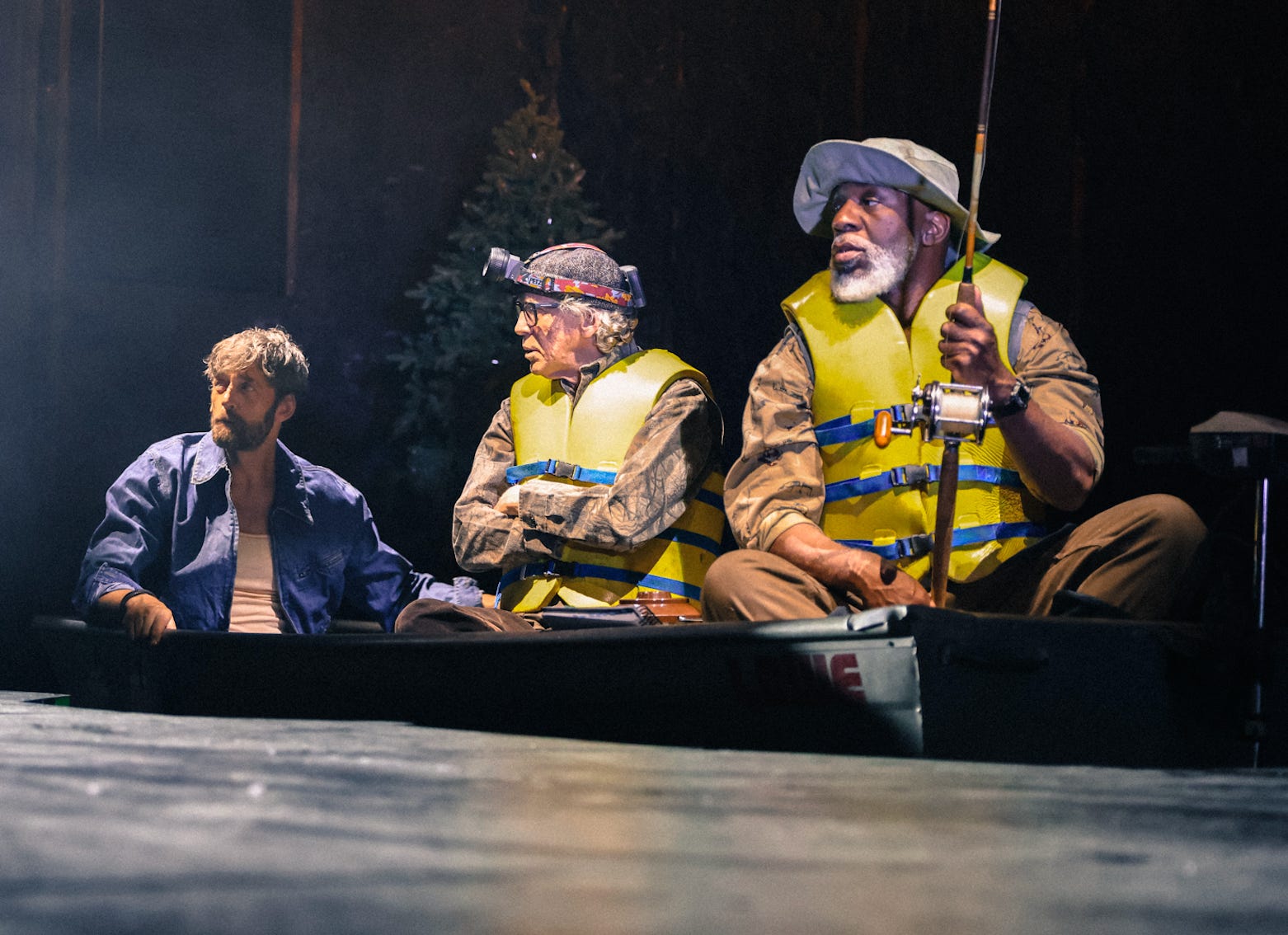
Forgive me, forgive me. I am starting my response to John J. Caswell, Jr.’s beautiful play Jerome with a conjured memory that revolves around some bodily fluid horror. Perhaps fitting, though, for a ghost story with a ghost town as its backdrop.
The year was 1995. I was nine years old. I was sitting in the backseat of my parents’ Isuzu Trooper, and we were trying to escape the heat of Phoenix with a day trip up to the north country. My parents raised my brother and me in Phoenix, but they spent every chance they could escaping to other parts of the state — Tucson, Flagstaff, Tubac, Sedona, Globe, Prescott. We’d go for a day, wander around a small town that felt more alive and soulful than Phoenix with its strip malls and franchised restaurants, and we’d drive back after sunset, my head nodding off in the backseat, the swirling off-ramps of the I-17 flying past me.
My parents loved Jerome. We would go to Jerome often — sometimes on a stop back from Sedona, sometimes as its own little trip. It was a former mining town that shirked its identity as a ghost town by filling itself to the brim with artists, iconoclasts, and outliers. My dad often called it “the only ghost town that came back from the dead.” To me, it felt like a rewilding. A town choked out by its own devotion to industry was now alive again, a little softer, a little bloomier, in a more healthy conversation with its ghosts. As though people saw the negative space of what it could be, and turned it into an oasis.
The fated day in question: we were headed there for the day, for an arts and crafts fair that happened up and down the main road. I had read too much of my Baby-Sitters Club book on the way up, and I was feeling queasy. The I-17 runs through so many different terrains on its way up to the creosote scrub brush and piñons of the high country — it crosses through sere desert, cuts through jagged rock, and weaves through blankets of plains grass. By the time we made it to Jerome, which zig-zags up a mountain pass that I always thought I’d die on, I got carsick and I puked my breakfast all over myself and the backseat of the car.
A half hour of cleaning up the mess with paper towels and a bottle of car Windex, and my overalls were still covered in a few splatters of barf. I didn’t want to leave the car, I was so ashamed. But my mother, in her brilliance, offered me a solution.
“Why don’t you take off your flannel overshirt and tie it around your waist? That will cover up most of it. And if anyone asks you about the splotches on your knees, just tell them: you’re a painter, and these are your painting clothes.”
Aha! I thought. Of course! This isn’t barf! This is paint! These soiled clothes are proof that I am an artist!
And I left the car, tied the shirt around my waist, and proudly strutted up and down the streets of the art fair, head held high. I was weaving amongst my fellow artists who were selling their wares — sand art and pottery and jewelry and framed watercolors. Surely they could see, upon first looking at me, that I was one of them.
No one ever asked me why I had barf all over my pants. Perhaps they actually thought I was a painter. More likely, they knew I got carsick on the windy mountain roads.
Jerome is a play about love, and community, and about all the ways we care for those we love when sickness is clamoring at the fringes, in the doorways, down the mine shafts, across the telephone line. Caretaking is a series of small and big negotiations, and at the center of it all is the person who is being cared for, whose desires and circumstances are often at odds. My mother, when she got sick a few years ago, maintained a sense of pride, wanted to stay as autonomous as she could for as long as she could. She didn’t want to tell anyone of her sickness. She wanted to eat the foods she liked until she couldn’t; she wanted to maintain her hobbies until she lost strength. She did not want to stay in the hospital, ever. She knew what she had, but she didn’t disclose it. And she didn’t like talking about her pain. When she passed away, some of her friends didn’t even know the extent of her illness.
I wasn’t her primary caretaker, but I traveled back and forth from New York to Phoenix to be with her and help when I could. My feelings around caretaking would oscillate wildly. Sometimes I felt more like Doane in Jerome, rigorously keeping hold of as many traditions as possible, helping her to find joy by maintaining routine, seeking out positive moments, trying to make her laugh. Sometimes I felt more like Bruin, so wracked by the prospect of losing her that I would fantasize of leaving, of coming back to New York and back to a real life, one that wasn’t filled with anticipatory grief at every turn. But I was always yanked back to the present moment when I was with her — holding her hand, watching the Suns game, planning our next day trip for when she felt a little better. We had always talked about opening a bookstore up north, taking the Verde Valley scenic train ride, stopping at the Haunted Hamburger and the Spirit Room. We never got to do that stuff.
A thought has crossed my mind often in the last ten years: If AIDS had not decimated an entire generation of gay men, we would not be experiencing fascism in this country at the rate and with the fastidiousness that we are experiencing it today. We lost an entire generation of thinkers, activists, artists, war veterans. We lost the possibility of an antidote to the suffering that we are experiencing at the hands of our small-minded leaders. We lost expansiveness; we lost connectivity. We lost entire communities, entire futures. And now their ghosts walk among us, or they don’t. Perhaps it’s too depressing for them to witness. Perhaps they’ve shuffled off to the great Cinque Terre in the sky, wishing us well while knowing we’re too far gone.
But if Jerome, the former ghost town AND the play, has taught me anything, it’s that nothing is too far gone, and no fate is fully writ. We still have the opportunity to fill the negative space of our American landscape with goodness, with connection, with hope. We still have the opportunity to rewild it — to let flowers bloom between the slabs of fascist concrete, to let our roots disrupt and crack their poorly laid foundation. Can we carry the torch that these men would be carrying if they were still earthside? Can we allow for hope and love to bloom in a world that feels like it’s already lost? Con and Doane and Bruin did. We can too.
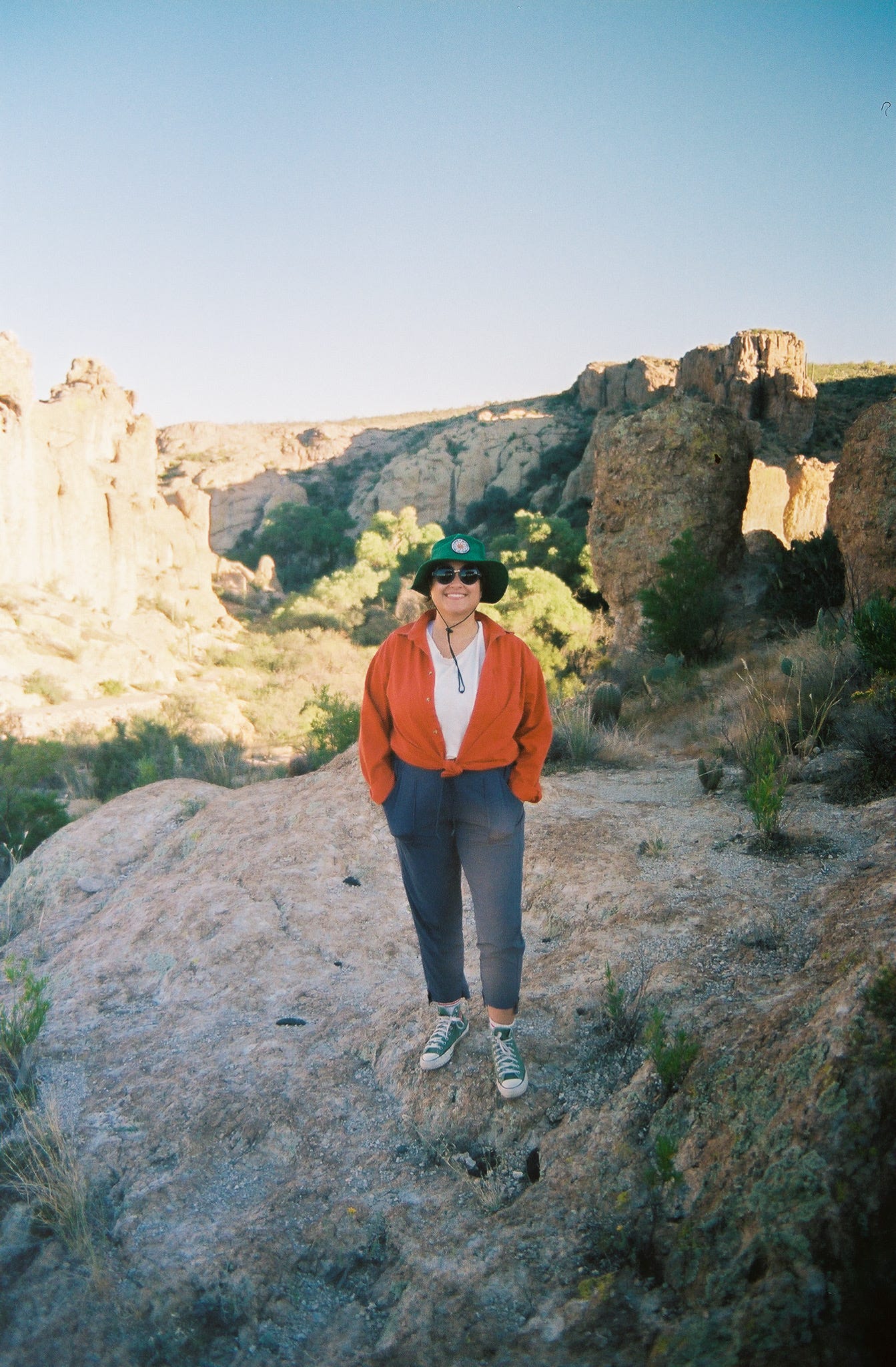
Jaclyn Backhaus is an award-winning playwright and screenwriter. For Playwrights Horizons: Wives, Men On Boats. Other Off-Broadway: India Pale Ale, Out of Time. Alum of the 1497 Features Lab and the Sundance Episodic Intensive. She was raised by two botanists in the Sonoran Desert, the most biodiverse desert on Earth.