

Treasure
By Eboni Booth

On public displays of despair (and care): This week, we’re sharing Pulitzer prize-winning playwright Eboni Booth’s response to reading The Dinosaurs.

I am from New York City and I have spent most of my life taking the subway. When you take the subway, you sometimes cry on the subway because to live in New York is to live a somewhat public life. I’ve been confronted with unwelcome news in the middle of my day — no retreat! — and there I am having a private moment of despair underground: a failed audition; horror headlines in the news; I can remember crying (endlessly) ten years ago sitting on a G train two-seater bench because the boy I liked hadn’t texted me back (oh, Eboni). I couldn’t know then that I would eventually hear back from this boy and there would be many more texts and even a baby in our future — at the time, all I knew was how sad I was, the spigot wouldn’t turn off, and then a woman, a stranger, leaned across the subway aisle, her face bright with concern, and handed me a tissue.
Kindness from strangers is a very particular type of blessing. It’s one I found myself thinking of when I read Jacob Perkins’ The Dinosaurs. The women in Jacob’s play aren’t necessarily strangers, but their weekly meetings require them to step outside of their regular rhythms and sit in community with people not otherwise a part of their lives. I’ve read Jacob’s play twice now, and each time it has left me with the same feeling I had when that woman on the train tried to help me: I feel cared for in an unexpected way, and the surprise of the support fills me with something warm and hopeful. I feel like I can face life.
In The Dinosaurs, there are Saturday meetings. Folding chairs and donuts and urns of coffee. There is concern about how to live and a curiosity about how to do right by others. There are moments that feel small, but later reveal themselves to be of cosmic significance. There are efforts to communicate something, desires to be seen, there is coming together, and there is an ambient anxiety that threatens to tear apart. There is also the passage of time. There is both too much of it and not enough. In The Dinosaurs, time collapses and rolls forward and stays indifferent to our needs and grabs us by the scruff of our necks and forces us to change but says nothing when we refuse to do so.
An offered seat. An “are you okay?” A standing Saturday meeting. A tissue on the train. These are the treasures that make it possible to face down the inevitable. We need each other in order to feel like maybe time won’t have its way with us.
In The Dinosaurs, I thought I was looking at a small thing that turned out to be a big thing. How lucky am I? How lucky we are.
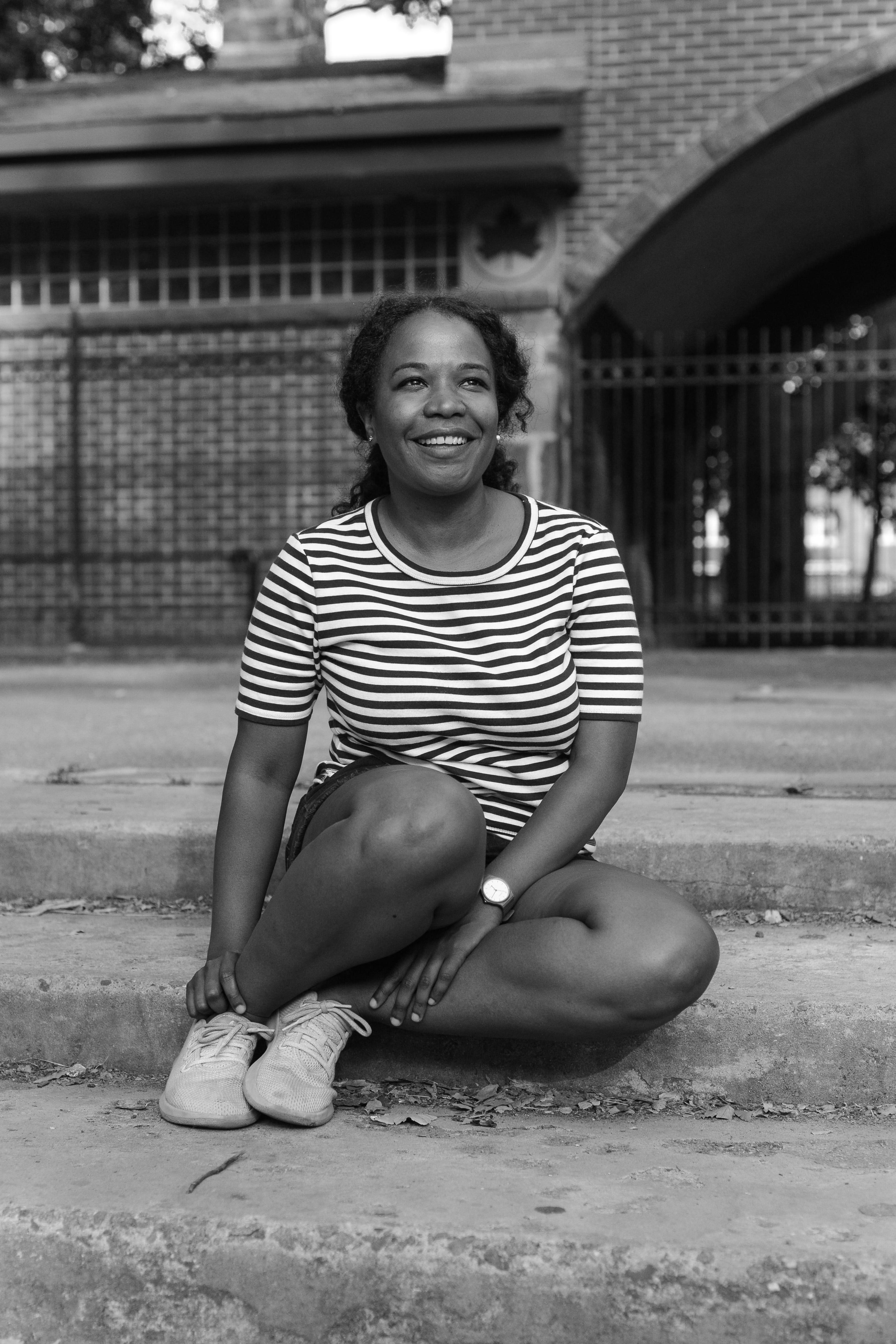
Eboni Booth is a writer and actor from New York City. Her plays include Primary Trust (Roundabout Theatre, Pulitzer Prize for Drama) and Paris (Atlantic Theater). She is a graduate of Juilliard’s playwriting program and the University of Vermont.